
10 best medical company websites: examples of clinics and UX

The website of a medical company cannot be assessed only by its calm palette, photographs of doctors and the “Sign up” button. A person comes to it with a specific task: to find a specialist, to understand whether the clinic is suitable, to find out the conditions, to prepare for the visit, or to quickly contact the reception desk. If a website doesn't answer these questions in a few minutes, a beautiful design won't help either the patient or the clinic's marketing.
The selection contains 10 strong websites of medical companies and clinics. Seven examples are existing sites of large medical organizations, three are NBM-IT cases. We look at them not as medical advice, but as digital products: patient journey, doctor search, service structure, trust, record, content and local SEO.
This is not a rating of doctors or quality of treatment. This is an analysis of what interface and search solutions are useful for a clinic website. The information on the site must undergo medical and legal verification by the owner of the clinic, and not replace the consultation of a specialist.
If you need a general guide to corporate structure, and not an industry-specific scenario for a clinic, see the selection best corporate websites. Here the focus is only on the medical context: trust, records, doctors, branches and patient information.
If your goal is not to collect redesign references but to systematically increase search visibility and appointment bookings, use our dedicated guide for SEO promotion of a medical website. It examines the structure of demand, local search, medical editing, analytics and integration with CRM or MIS.
Quick choice: which example to look at for your task
| If you need | Look first | What to take into the project |
|---|---|---|
| Multidisciplinary clinic | Mayo Clinic, MEDSI, Z-Clinic | Search by doctor, condition and specialty, routes to an appointment, clear referral pages |
| Branch network | Cleveland Clinic, Mother and Child | Link “doctor - service - clinic - appointment time”, filter by location and unified branch cards |
| Premium or international medicine | EMC, Hadassah Medical Moscow | Evidence of expertise, separate scenarios for different audiences, transparent communication channels |
| Pediatric or family medicine | DocDeti, Z-Clinic | Clear language, answers before recording, command and quick selection of the desired direction |
| Aesthetic medicine | EMC, New You Laser NYC | Service pages, specialist profile, photos and conditions only with proven communication and local SEO |
| Medical portal or professional registry | RUSBMT | Role model, secure offices, structured forms, activities and working with sensitive data |
| Content growth in search | Mayo Clinic, Cleveland Clinic, New You Laser NYC | Expert materials, authors, date check, connection of the article with the doctor, service and record |
10 strong websites of medical companies
Examples of patient journey, trust, records and service structure
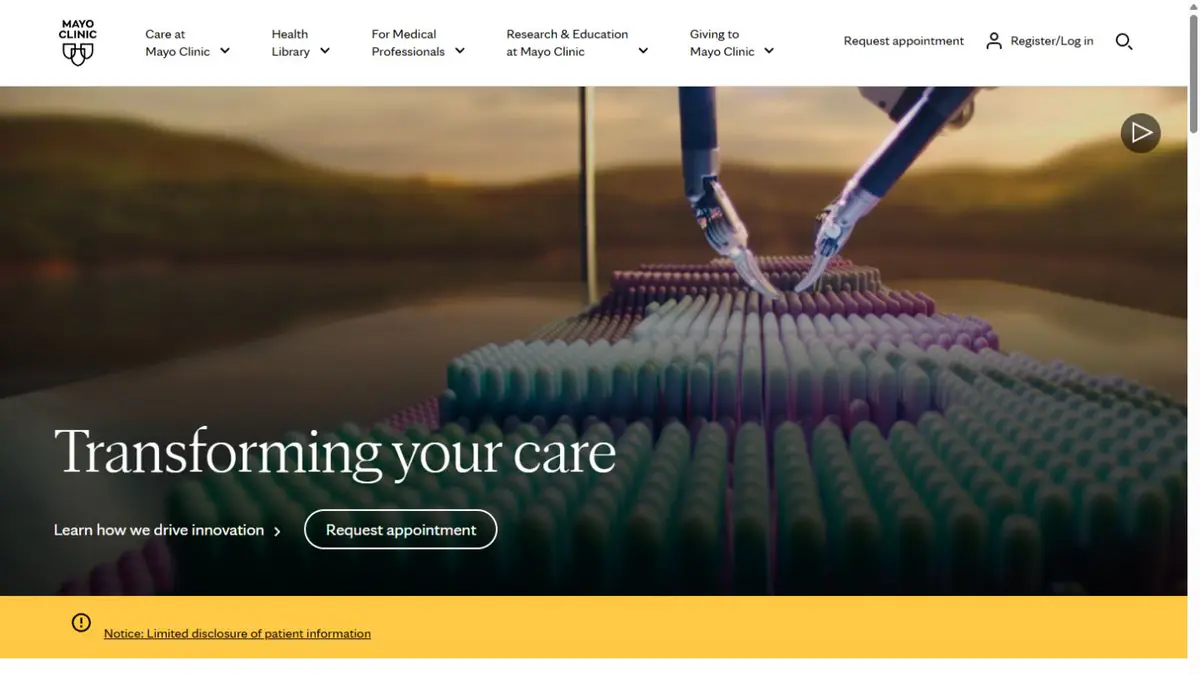
1. Mayo Clinic
A strong guide for a complex patient journey: searching for a doctor by condition and location, making an appointment, answering questions before contacting, and separate routes for different audiences.
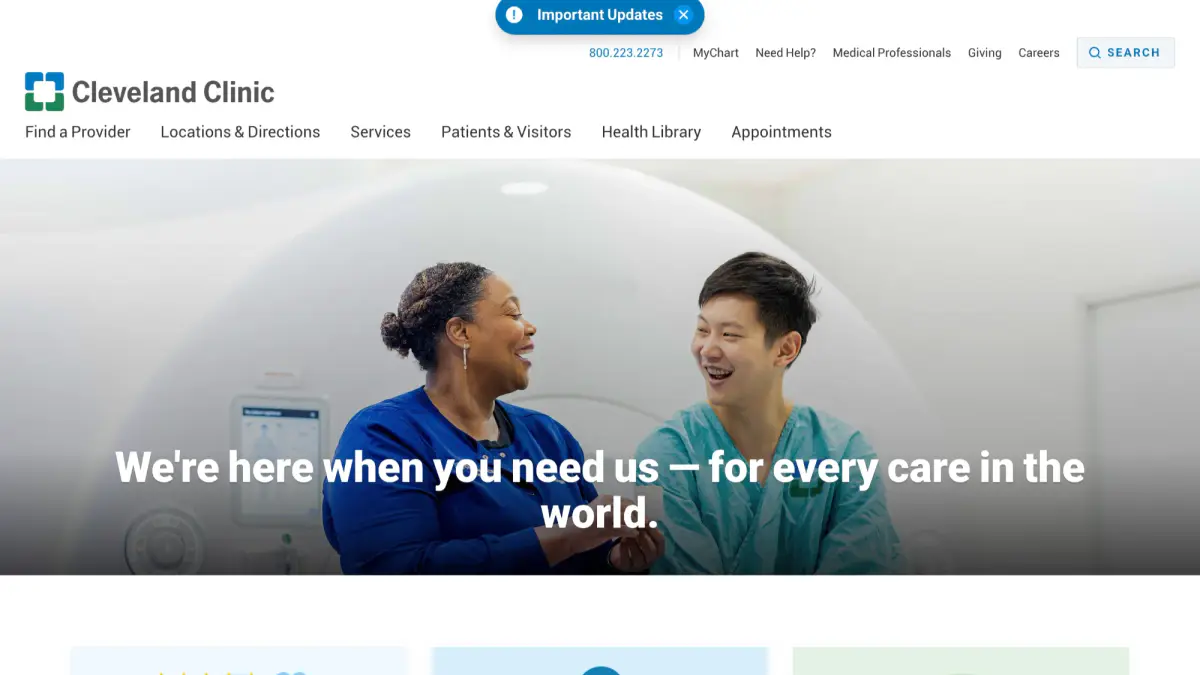
2. Cleveland Clinic
An example of searching for a specialist as a full-fledged interface: specialty, location, doctor’s profile, reviews and different recording scenarios without an overloaded main page.
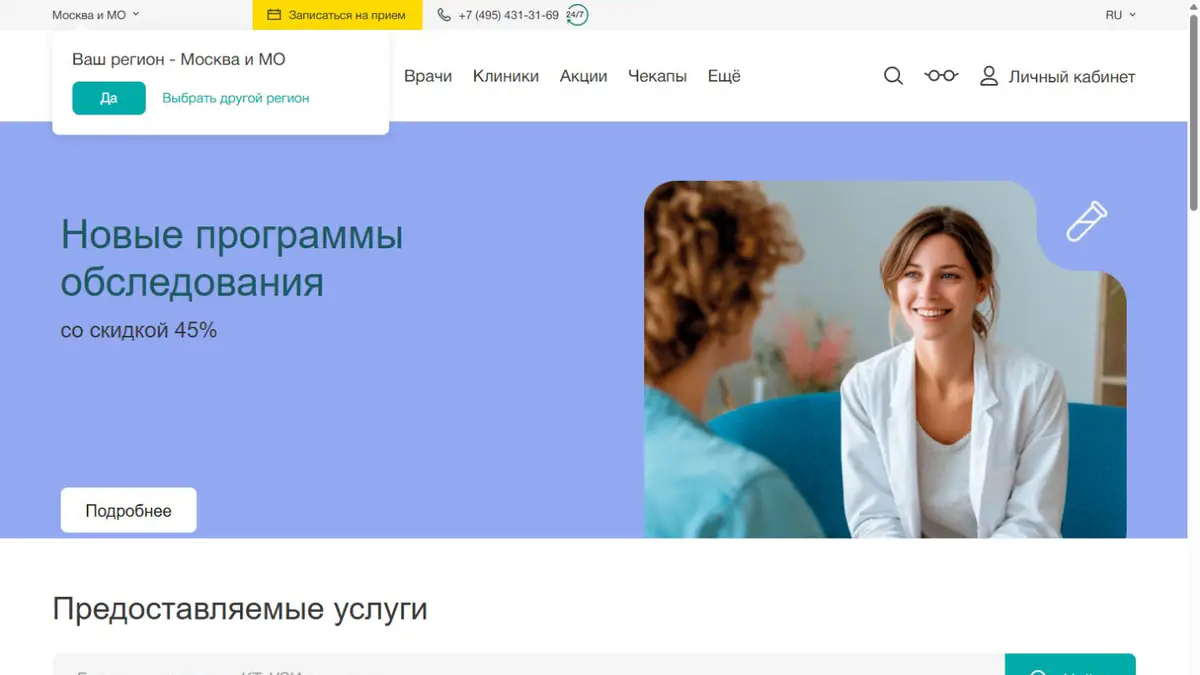
3. MEDSI
A guideline for a large network: separation of services, clinics, doctors and patient scenarios, so that a person does not come to an abstract page, but to the next understandable action.
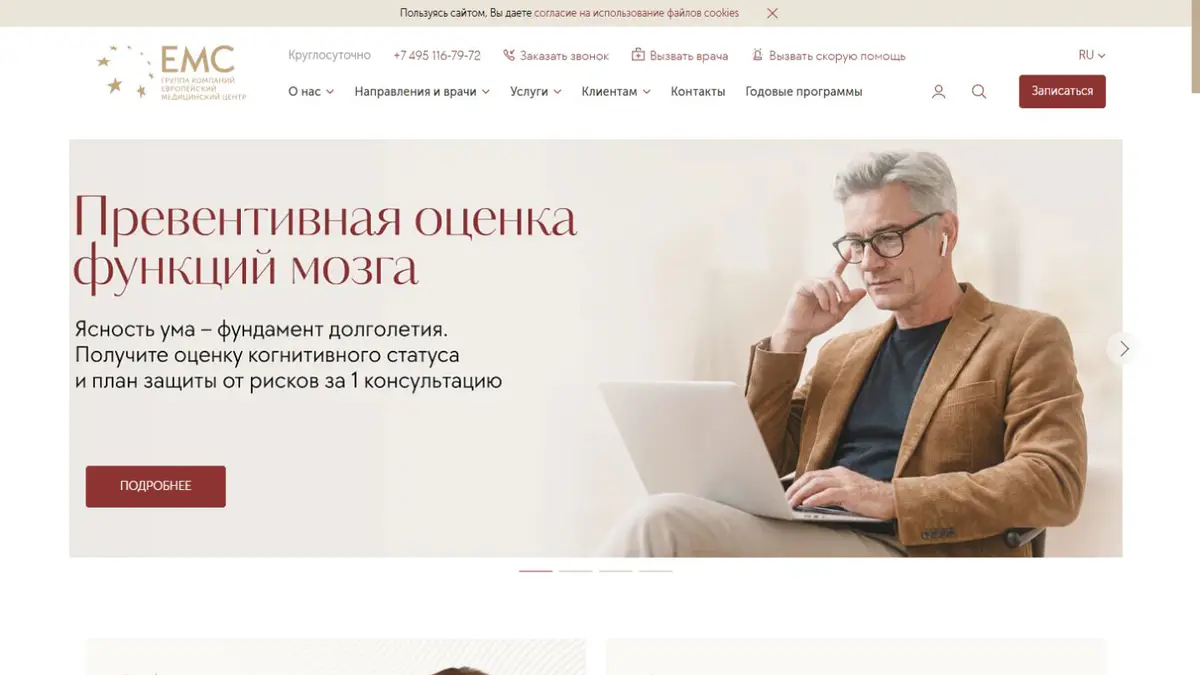
4. EMC
Useful for the premium segment: accurate presentation of referrals, doctors and service, where trust is formed by facts, not promises of treatment on the first screen.
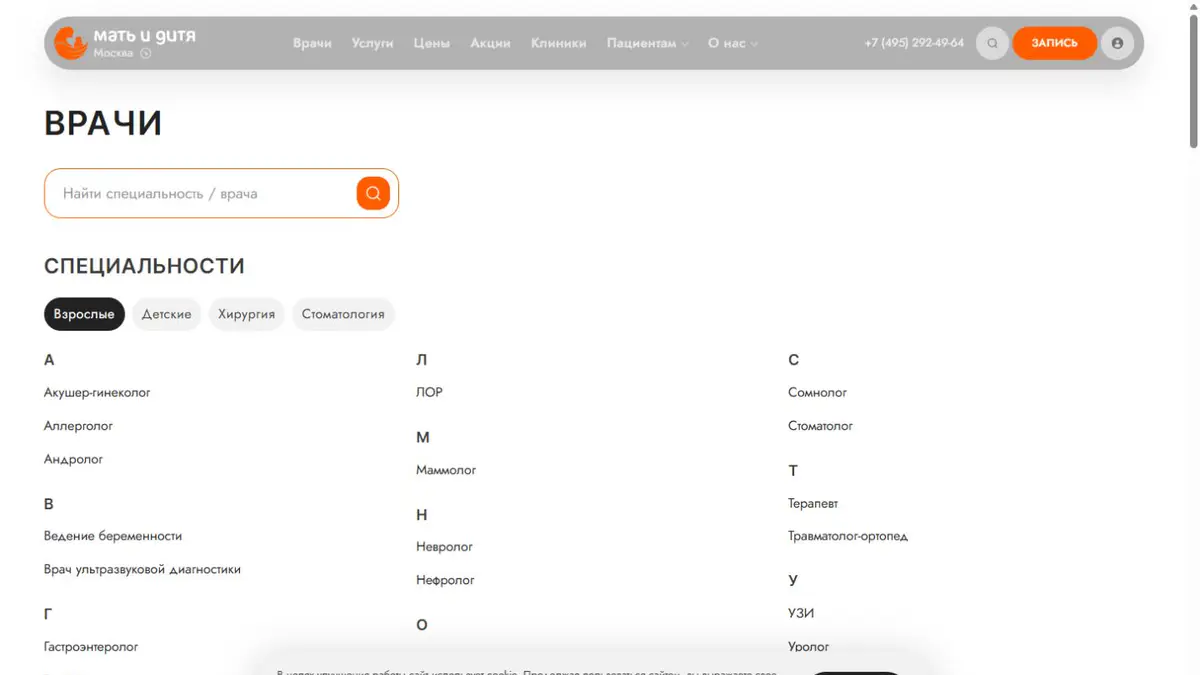
5. Mother and child
A good guide for sites with a long and emotionally complex choice: clear directions, doctors, clinics, preparation for the visit and registration as part of one route.
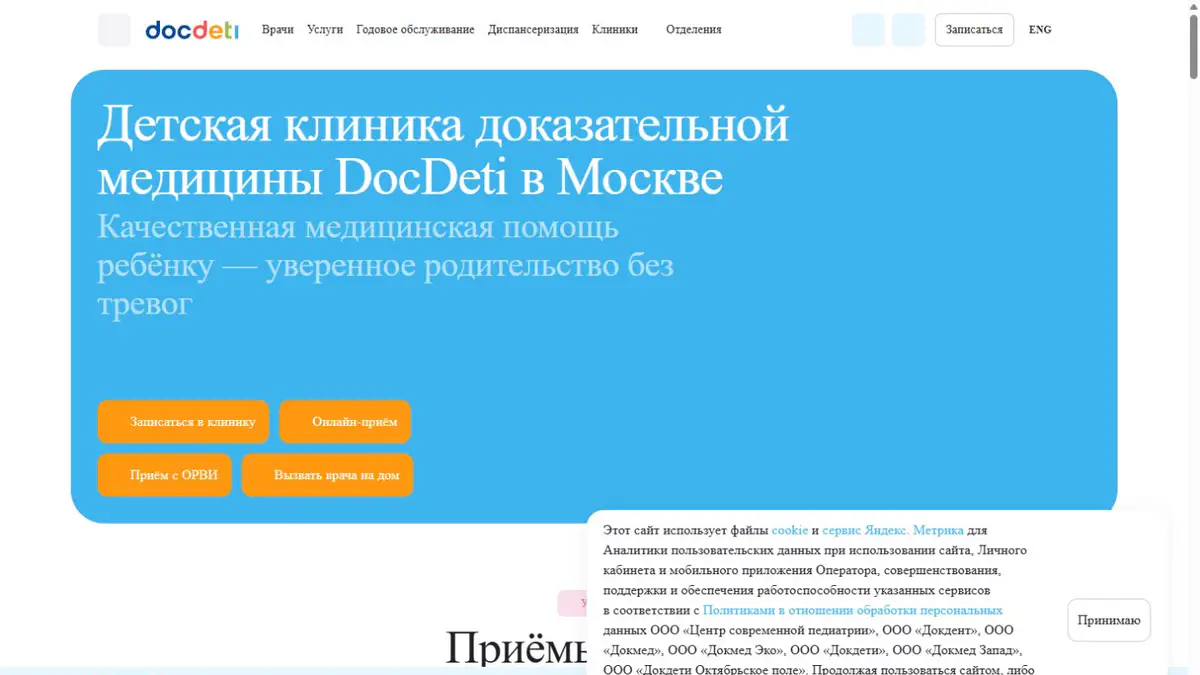
6. DocDeti
An example of human, but not infantile communication: the site removes typical questions from parents, shows the command and quickly leads to the desired call scenario.
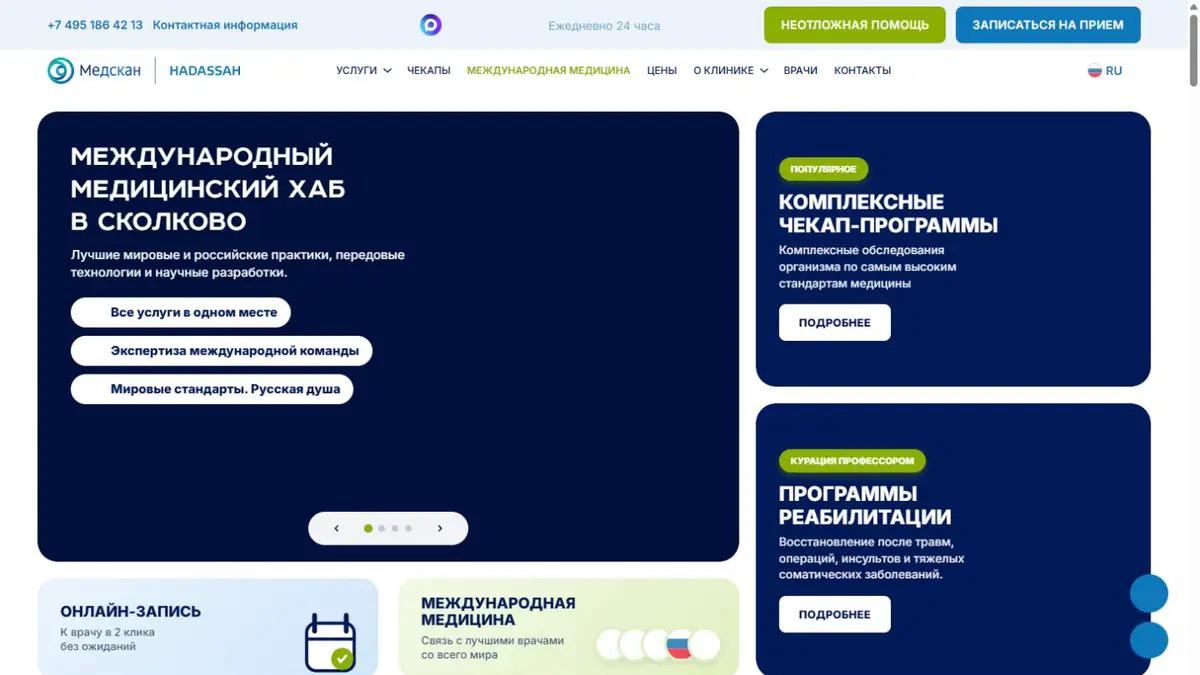
7. Hadassah Medical Moscow
Useful for clinics with complex services and multiple audiences: referrals, doctors, international patients, document preparation and communication channels are not mixed in one form.
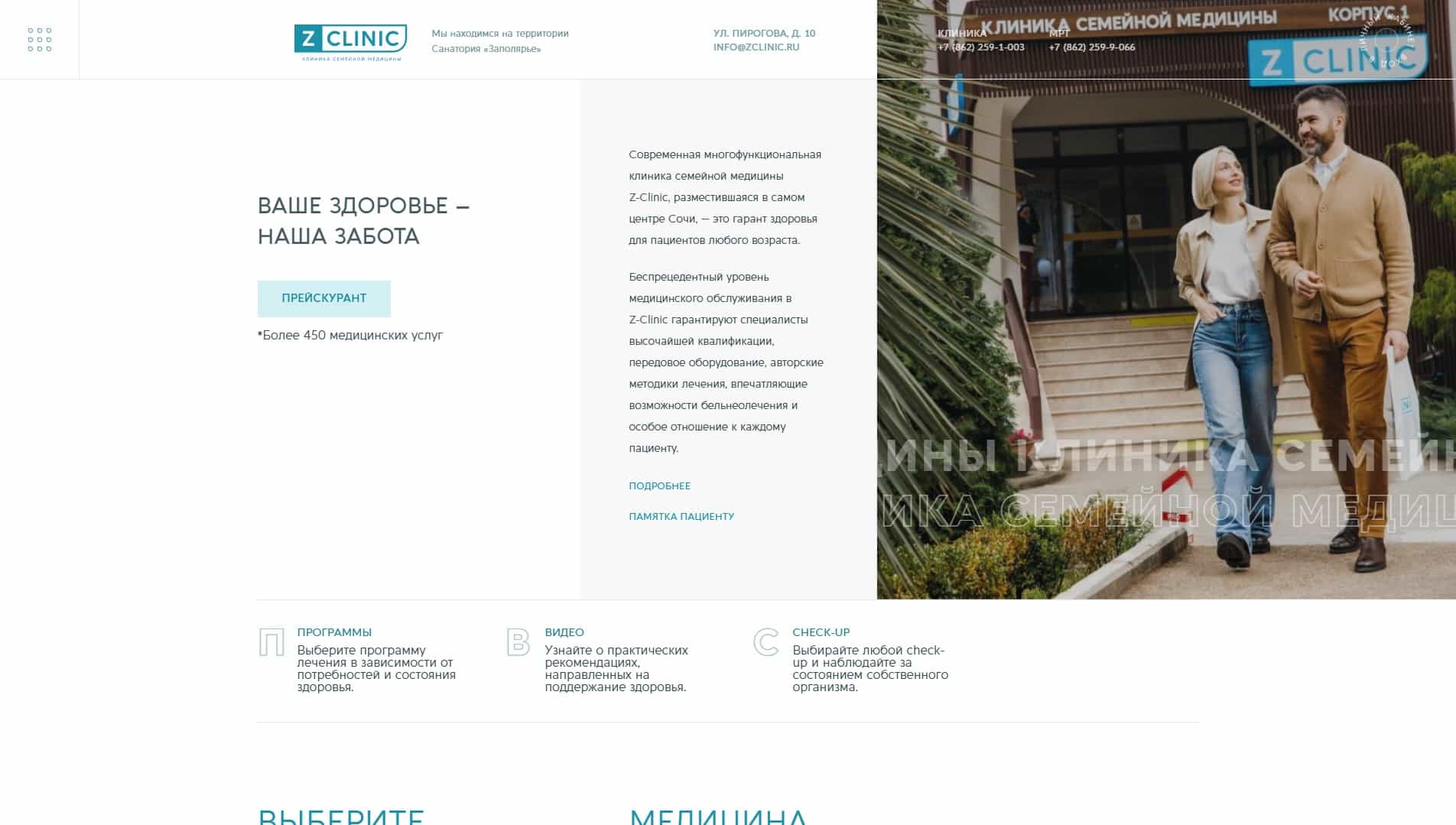
8. Z-Clinic
Launching a family medicine clinic brand: website, content, positioning and communication in which the patient quickly understands the directions and the next step.
9. RUSBMT
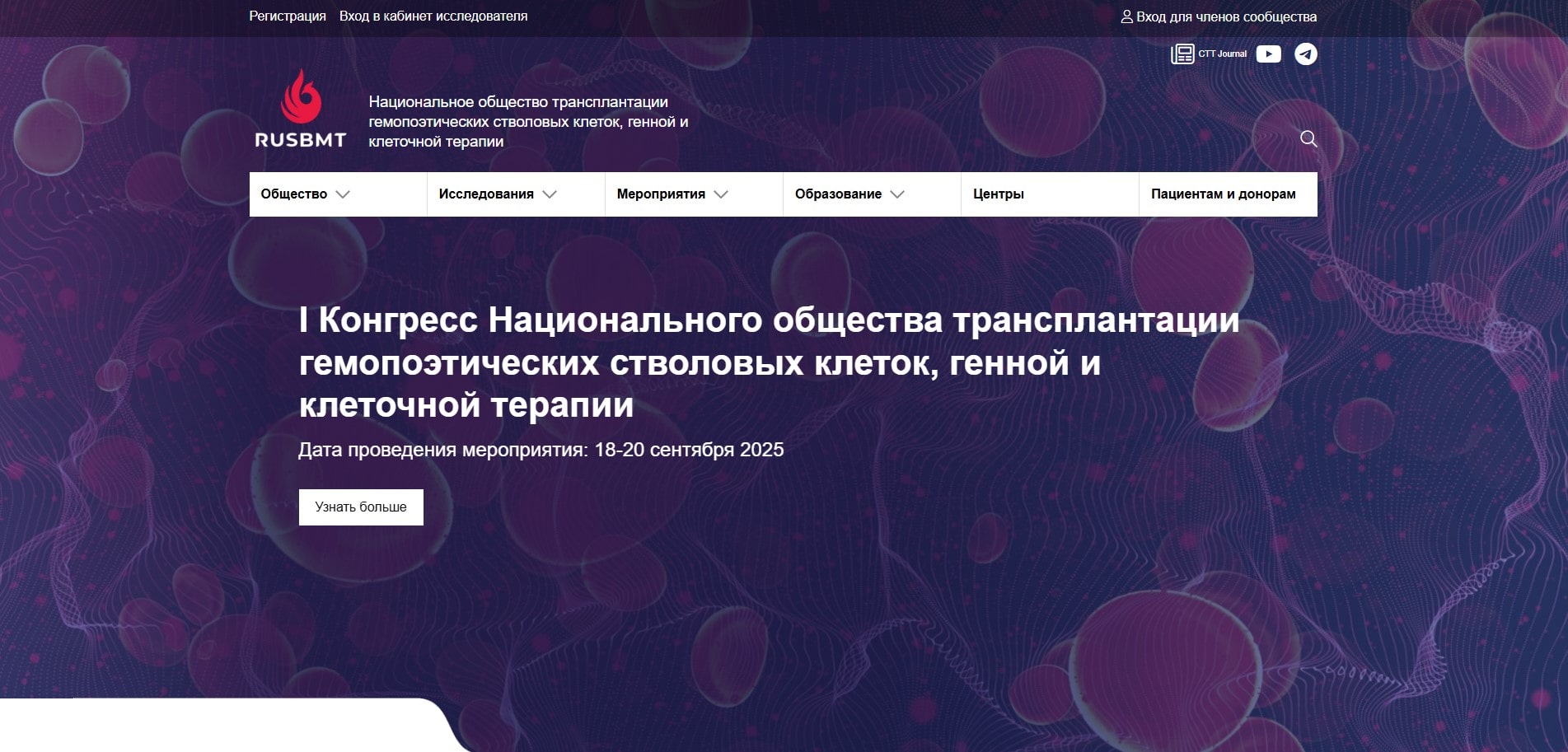
National Society of Bone Marrow Transplantation portal: registry, personal accounts, roles, protected data, events and publications for the medical community.
10. New You Laser NYC
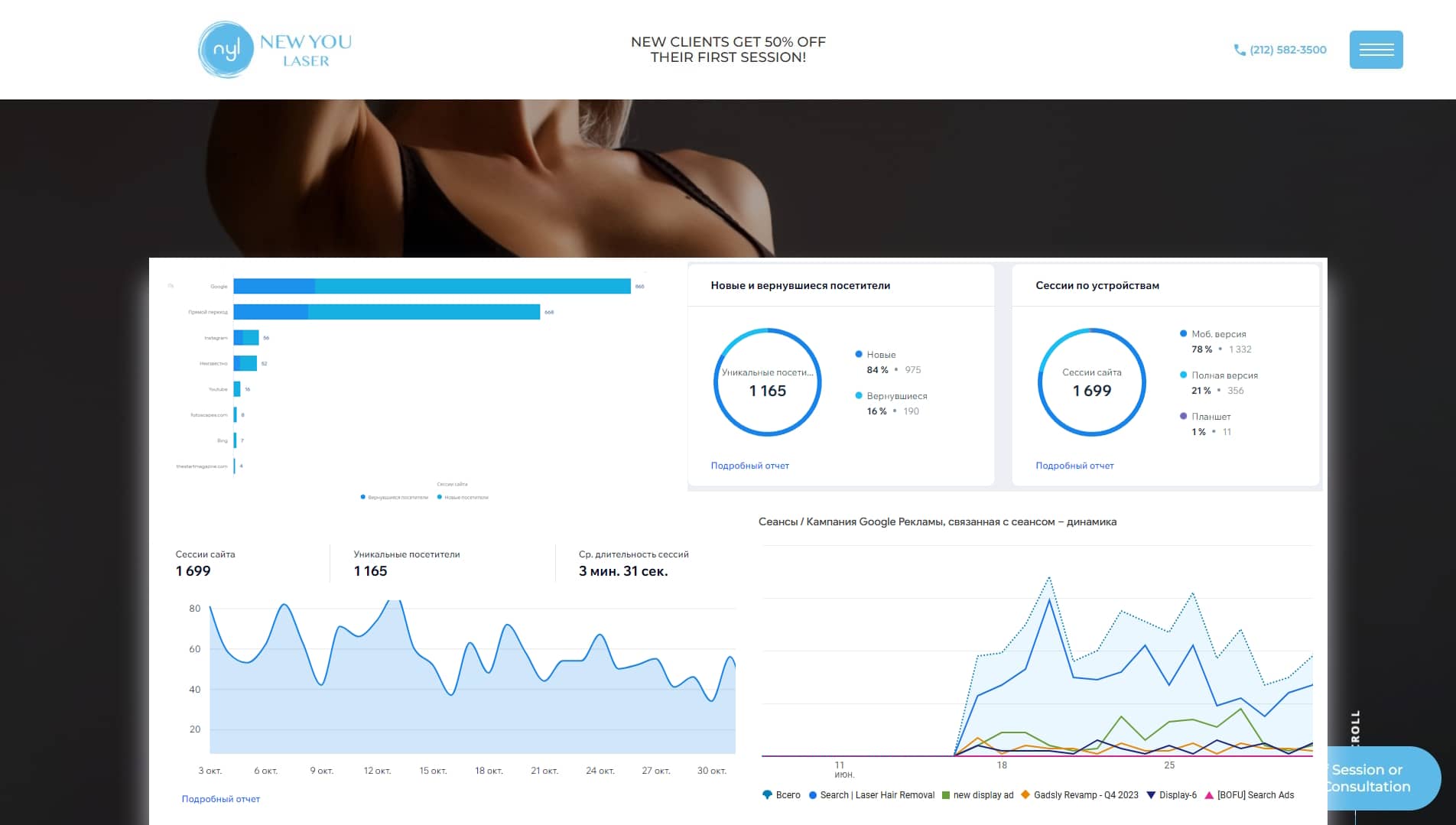
Regular technical support and SEO for the laser cosmetology clinic: service pages, blog, loading acceleration and local visibility in search.
What unites strong websites of medical companies?
1. The patient sees a path, not a catalog of services
On a weak clinic website, the user receives a long list of specialties and one general phone number. On a strong one, he can start with how he formulated his task: symptom, referral, doctor, clinic, diagnosis, urgent communication or return visit.
For example, Mayo Clinic allows you to search for a specialist by name, condition or procedure and links the search to a location. This does not need to be copied one to one. For a small clinic, a correct directory of doctors, clear specialties and honest information on when and how to sign up is enough. The main thing is not to force the patient to guess the internal structure of the organization.
2. The doctor is a full-fledged essence of the site
A specialist card should not be a photo with a name and a button. For the patient, specialization, direction, clinic, experience, documents in an acceptable format, recording methods, language of communication and an up-to-date schedule, if available, are useful.
Cleveland Clinic shows the search performance by specialty, location and doctor. For a medical site, this means a technical data model: doctor, service, branch, referral and appointment slot exist separately and are interconnected. Then one edit in the doctor’s profile is correctly reflected in all the necessary sections, and does not require changing ten pages manually.
3. Trust comes from verifiable details.
In the medical field, expertise cannot be replaced with marketing promises. The patient needs clear facts: who provides the service, where he receives it, how to prepare for the visit, what documents and conditions are available, how to contact and what will happen after the application.
For the site this means:
- date of updating on medical materials;
- author and medical reviewer if the clinic uses such a process;
- links between doctor, service, branch and useful article;
- real contacts, licenses and documents in the form agreed with lawyers;
- lack of promises of results that cannot be confirmed.
Search engines do not provide a separate “medical site ranking button.” But Google recommends evaluating the entire page: security, portability, absence of intrusive elements, clear separation of main content from secondary content, and a good user experience. This is especially important in competitive requests where the patient has many alternatives. See Google's page experience guide.
4. Recording is a script, not just a form.
The patient may be new or returning, looking for a specific doctor, or confused about who to go to. Therefore, the record should have different understandable inputs: “find a doctor”, “choose a direction”, “call”, “leave a request”, “enter your personal account”. Cleveland Clinic separately leads to registration, search for a specialist, virtual visits and personal account, without forcing the user to go through one universal path.
For your clinic, before launching the form, it is worth describing:
- which requests are accepted online and which require a call;
- what fields the registry actually needs;
- where the source, service, branch and UTM tags are transferred;
- what the patient sees after sending and who is responsible for the appeal;
- How integration errors or unavailability of slots are recorded.
5. Local structure is more important than mass pages for cities
For a network of clinics, searching by location is critical. But you can’t get SEO traffic from hundreds of identical “service + city” pages, where only the name of the area changes. A useful branch page should answer real questions: address, how to get there, doctors, directions, schedule, contacts, available methods of registration and preparation for the visit.
The service page should explain the service itself within the clinic's scope, and then suggest relevant doctors and affiliates. The doctor's card, in turn, should lead to a real record. This creates a clear “referral - service - doctor - clinic” grid, convenient for both humans and search robots.
10 examples: what to include in your medical website
1. Mayo Clinic: Search by Patient Task
Strength Mayo Clinic - a combination of searching for a specialist, referrals, preparation for appointments and materials for patients. On the appointment page, the clinic separates new requests, repeat patients, referrals from doctors and international scenarios.
What can be applied:
- search for a doctor by specialty, condition or name;
- a separate “how to sign up” page with clear steps;
- FAQ before the form, not after it;
- logical connection between material, service and record.
2. Cleveland Clinic: Doctor Search as a Product Feature
Cleveland Clinic useful because the search for a specialist is not hidden in the menu. It allows you to filter doctors by specialty and location, and doctor profiles lead to your next action.
For a network of clinics, this means: do not store data about doctors only in PDF or in service texts. You need separate structured cards and a single source of data for the website, CRM or recording system.
3. MEDSI: network scale without route loss
MEDSI useful to think of as a guide to a multidisciplinary network: the patient has entry through service, physician, clinic, and appointment. On a site of this scale, navigation is critical, otherwise a person will quickly get lost between dozens of directions.
For a small center there is no need to copy the volume. It is enough to take the principle: each service has a clear owner, a doctor’s profile, a point of delivery and a specific action.
4. EMC: premium service through facts, not decoration
EMC - an example for clinics where the patient’s decision depends on trust and quality of service. For such a site, it is important to clearly separate directions, specialists, clinics and methods of communication, and not hide everything behind an image-based first screen.
Practical lesson: Premium on a site is built on precise details, calm structure, quality of content and availability of the coordinator, not on complex animation.
5. Mother and child: scenarios of family and long-term choice
Mother and child - a guide for sites where the patient journey is longer than one record: diagnosis, observation, preparation, family, children's referrals and several clinics. In such topics, it is especially important to explain the path to contact in simple language and not overload the person with professional jargon.
What is worth taking: separate routes for audiences, connections between the service and the clinic, clear preparation for the visit and the ability to quickly select contacts.
6. DocDeti: clear language and lively team
DocDeti useful as an example of human communication in pediatric medicine. The clinic's website can be friendly, but it should not turn important information into advertising text. The command, specialization and path to the record should be read faster than decorative elements.
For a private practice and small clinic, this is a good principle: show people, process, answers to typical questions and real ways of communication before long SEO texts.
7. Hadassah Medical Moscow: different audiences, different scenarios
Hadassah Medical Moscow interesting for clinics with complex cases, international patients or multiple communication channels. In these types of projects, you can't send everyone to one short form. Different scenarios require different clarifications, response SLAs and routing within the clinic.
At the development level, this means separate forms, clear rules for data transfer, protection of personal data and control of what the patient receives after contacting.
8. Z-Clinic: launching a clinic as a seamless digital system
NBM-IT case Z-Clinic - launching a family medicine clinic under a new brand. In the project, the website did not exist separately from positioning, content and marketing: first we determined how the clinic should be understandable to the market, then we assembled the website and communication.
What is useful to take:
- structure of directions before design;
- a combination of brand, website and advertising materials;
- content that answers the patient's question rather than filling the page with keywords;
- measurement of requests by directions and channels.
9. RUSBMT: medical portal, registry and secure offices
NBM-IT case RUSBMT shows a different type of medical site: not an appointment-based clinic, but a digital platform from the National Society for Bone Marrow Transplantation and Cellular Therapy. A catalog of materials and a regular feedback form are not enough here. The portal should support different user roles, personal accounts, structured data entry, uploads, events and professional publications.
What is useful to take from the project:
- design roles and access rights before developing the interface;
- separate the open information portal from protected work sections;
- collect data through structured forms rather than through files and email;
- provide for auditing of actions, backup and requirements for personal data;
- connect publications, congresses, broadcasts and community work in one system.
RUSBMT is particularly useful as a guide for medical associations, research projects, registries and educational platforms. In such products, editorial convenience is important, but security, data quality and access control are more important than decorative effects.
10. New You Laser NYC: Technical Support and Local Search
Case New You Laser NYC shows that it is not enough for a medical website to design it once. For stable growth, you need regular technical updates, new service pages, working with a blog, speed control and local SEO optimization.
A useful principle for a clinic: each new page should have specific intent, a canonical URL, and a connection to a service, doctor, or location. Then the site section grows as a system, and not as an archive of random publications.
What structure does a clinic website need?
The minimum architecture depends on the size of the clinic, but most often the following entities are needed:
- directions and services: what the clinic does, who is suitable for treatment, how to prepare and how to sign up;
- doctors: profile, specialization, reception locations, available registration methods;
- branches: address, contacts, map, schedule, directions and specialists;
- patients: preparation, documents, prices or payment procedures, answers to questions, contacts;
- content hub: articles with date, author, verification and connection to destinations;
- registration and personal account: Only those scenarios that the operational process actually supports.
Technically, this is better defined as separate content types and the relationships between them. Then the editor changes the doctor’s profile once, and the site updates the results in services, branches and search. This model reduces the risk of errors, duplication and outdated information.
SEO for Medical Websites: How to Grow Without Risking Trust
Medical inquiries are competitive, and visitors are particularly sensitive to the quality of information. Therefore, “write 10,000 characters with clues” usually loses to a page that answers the problem and honestly shows who is providing the service.
What should be on priority pages:
- one main intent per page: service, doctor, direction or branch;
- unique title and description without template lists of cities;
- one H1 and a clear H2 structure;
- real contacts, routes and recording methods;
- cards of relevant doctors and branches, and not random linking;
- update dates and authors of expert materials, if the clinic publishes medical content;
- optimized images, correct Open Graph and fast mobile version;
- sitemap only from final canonical URLs, without search, filters and duplicate parameters;
- schema.org for Organization, BreadcrumbList, Article, Physician or MedicalClinic only when this data is on the page.
Search Engine Optimization is not a substitute for legal or medical due diligence. For each country and destination, the clinic may have its own requirements for licenses, advertising, prices, personal data and disclosure of information. They need to be agreed upon before publishing, not after receiving traffic.
What to check before redesigning a clinic website
- How many clicks do you need to make an appointment for key services and doctors?
- Is there a single source of data about specialists, branches and schedules?
- Does the patient understand where his application will go and when he will receive a response.
- Do filters, search and city pages create duplicates in the index?
- Are contacts and emergency channels visible without scrolling or pop-ups.
- Are articles, doctor profiles and service pages updated according to clear regulations?
- Is it possible to measure appointment, call and form by service, doctor, branch and advertising source.
- Do recording widgets, chats and heavy images degrade mobile speed?
- Is there staging, backups and control over CMS updates and integrations?
- Whether the content undergoes medical, legal and editorial review before publication.
For the technical part, the same basics of a good user experience are important: a secure connection, a mobile version, no intrusive interstitials, a clear separation of main content and advertising. Google recommends evaluating a page holistically rather than trying to improve one formal signal. Details in Google documentation.
FAQ
What must be on the clinic website?
Directions and services, doctors, branches and contacts, clear registration methods, information for the patient and a technically correct mobile version. The specific set of pages and mandatory disclosures depends on the country, license and format of the clinic, so it must be agreed upon with the relevant lawyer and the head of the medical department.
Do you need a separate website for each branch?
Usually not. A single platform with separate branch cards and a clear URL structure is more effective for the network. A separate website is justified if the branches have different brands, services, operational processes or legal contours.
How to promote a clinic website in search?
Start with a map of services, doctors, branches and real search intents. Then ensure your pages are crawlable, unique metadata, useful content, local data, mobile responsive, and contextual relationships between entities. Do not create mass copies of pages for cities or symptoms.
Which CMS is better to choose for a medical website?
The choice depends on integrations, role requirements, editorial process, and support team. WordPress is suitable for content and marketing sites if you set up the data model, security, and updates correctly. For complex personal accounts, MIS or non-standard records, a separate service circuit may be required. Read more about the selection criteria in the article WordPress or 1C-Bitrix.
Is it possible to make medical articles using AI?
AI can help with drafting, structure and editorial routine, but should not independently publish medical statements. The clinic needs a process of verification by a specialist, control of sources, update date and responsible author.
Conclusion
The best medical company websites operate not as advertising brochures, but as a digital registry and trust base. They help a person choose a specialist, understand the next step, sign up and receive confirmation that the clinic really suits his task.
If you're planning a launch or redesign, start with a map of patient scenarios and data: service, doctor, branch, record, content and analytics. Only after this should we discuss visual style, CMS and advertising channels.
NBM-IT develops service sites, content hubs, specialist directories and integrations with analytics and CRM. For a medical project, you can start with corporate website development, SEO promotion or web analytics.
Sources for external examples and actualization
Free project cost estimate
Answer 4 questions and we will send you a range of prices to suit your needs.